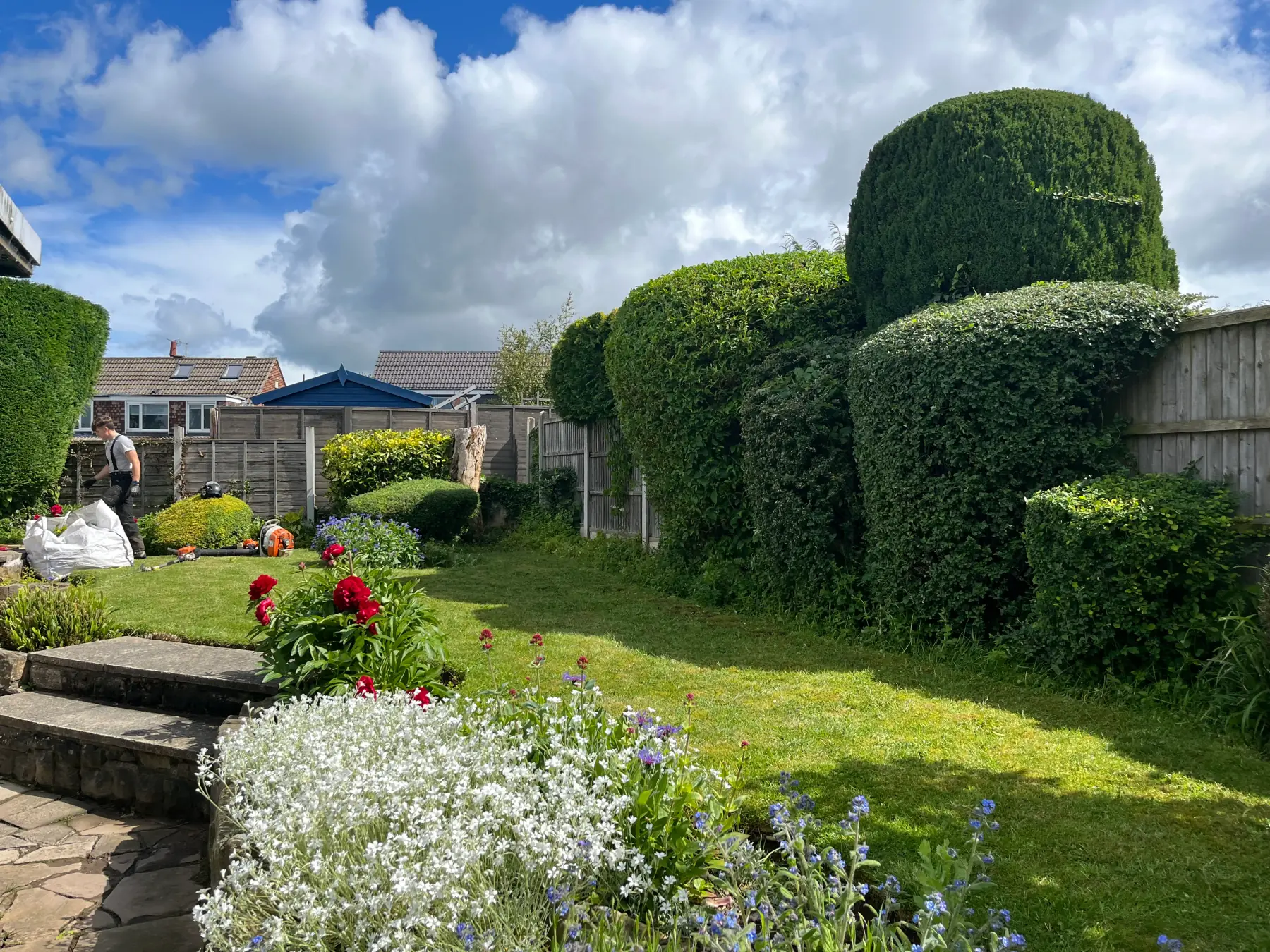
If a lender, surveyor or planning officer has asked whether you need a tree survey, the short answer is: sometimes yes, and only for specific reasons. A tree survey is a qualified arborist looking closely at the trees on or near your property and writing up their condition, safety and what they need. I do these across Leeds and out to York and Selby, and most people never actually need one.
This guide explains what a tree survey really is, the main types, who genuinely needs one, and a rough idea of cost so you are not caught out.
What a tree survey actually is
A tree survey is a written assessment by a qualified arborist. I visit the site, inspect each relevant tree, and record its species, condition, any defects, and the works it needs, with timescales.
It is not a tick-box exercise. The point is an honest, evidence-based view of whether a tree is healthy, safe and well managed, or whether something needs doing.
The written report is what lenders, surveyors, insurers and councils want to see. A quick chat or a photo is fine for a quote, but these parties need it on paper from someone qualified.
The main types of tree survey
“Tree survey” covers several different jobs. Knowing which one you need saves time and money, because they are not priced the same.
| Type of survey | What it is for | Who usually asks |
|---|---|---|
| Mortgage / homebuyer tree report | Assessing a large tree close to a building, mainly a subsidence-risk check on shrinkable clay soils | Some lenders and surveyors, during a purchase |
| BS5837:2012 survey | Recording and grading trees for a planning application; plotting root protection areas | Local planning authority, architects |
| Tree health & safety / condition survey | Checking whether a specific tree is declining or unsafe | Owners, landlords, managing agents |
| Subsidence & insurance report | Supporting an insurance claim or investigation involving a tree | Insurers, loss adjusters |
| TPO / consent support report | Backing up an application to work on a protected tree | Owners applying to the council |
Mortgage and homebuyer tree reports
Some lenders and surveyors ask for one when a mature tree sits close to the building. The concern is usually subsidence on shrinkable clay soils, where tree roots can affect ground moisture near foundations.
This is a general concern, not a fixed rule, and it varies by lender and property. If you have been asked for one, a short arboricultural report on that specific tree is normally all that is needed.
BS5837 surveys for planning
If you are planning an extension, a new build or demolition where trees are on or next to the site, you will most likely need a survey to BS5837:2012, the British Standard covered in the government’s tree protection guidance. It is titled “Trees in relation to design, demolition and construction”.
A BS5837 survey grades each tree A, B, C or U by quality and value, and plots the root protection area so the design can avoid harming trees worth keeping. It usually comes with a tree constraints plan for the planning application. Our BS5837 planning survey guide covers what councils expect in more detail.
Condition and safety surveys
If you are simply worried a tree is dying, leaning or dropping limbs, a health and safety condition survey is the one you want. It tells you whether the tree is safe, what is wrong, and what to do about it. For the warning signs to look for first, see signs your tree is dangerous or dying.
Who typically needs a tree survey
You probably need some form of survey if you are:
- Buying or selling a property with mature trees close to the building, and a lender or surveyor has raised it.
- Planning an extension or new build near trees, where the council wants a BS5837 survey.
- A landlord or managing agent with a duty of care over trees on your land.
- Worried about one specific tree that looks unhealthy or unsafe.
- Making an insurance claim where a tree is involved.
Most homeowners with a healthy garden tree and no building work planned do not need a formal survey at all. If in doubt, ask before you pay for one.
What a tree survey report contains
A good report is clear enough for a non-expert to act on. For a standard condition or mortgage report, you can expect:
- Species of each tree, in plain terms and in Latin where useful.
- Condition and defects found on inspection.
- A risk rating reflecting how urgent any problem is.
- Recommended works and sensible timescales.
- Notes on any legal status, such as a TPO or conservation area.
A BS5837 survey adds the A/B/C/U grading and a tree constraints plan showing root protection areas, which the planning team and your architect use.
Not sure which survey you need?
Tell me what has been asked for and I will give you an honest view before you commit to anything. Book a free site visit or WhatsApp us a photo and I will point you the right way.
Rough cost of a tree survey
Prices vary with the number of trees and the type of report. As a general UK guide, not a quote, an arboricultural report commonly runs about £150 to £500.
| Report type | Rough guide price | Notes |
|---|---|---|
| Single-tree mortgage / homebuyer report | Lower end, around £150 to £300 | One tree, focused scope |
| Condition & safety survey | Middle of the range | Depends on tree numbers |
| BS5837 planning survey | Higher end, £400+ | More trees, more detail, constraints plan |
These are ballpark figures to set expectations. For a proper breakdown of tree work pricing generally, see our tree surgery cost guide. Any actual survey price I give you will be a free written quote for your specific site.
Timing and process
The process is simple and starts with no cost to you:
- Free initial site visit. I come and look, understand what has been asked for, and scope the report.
- The inspection. For one or a few trees this is usually under an hour on site.
- The written report. This normally follows within a few working days, or longer for large BS5837 sites.
Booking early helps, especially around planning deadlines, but there is no pressure. If you do not actually need a survey, I will tell you.
Local knowledge: Leeds, York and Selby
I carry out surveys across Leeds and out to York and Selby, and I know how the local councils handle trees. Before any works go ahead, protected status matters.
Always check whether a tree has a Tree Preservation Order or sits in a conservation area, through Leeds City Council or City of York Council. Selby comes under North Yorkshire Council. Our own TPO check tool is a quick first step, and there is a full explainer in our guide to tree preservation orders.
A survey that ignores legal status is not much use, so I fold that check into the work.
Next step
If you have been asked for a tree survey, or you are just uneasy about a tree near your home, get an honest view before spending anything. I have surveyed and managed trees across Leeds and York since 2012, with full insurance and ARB Approved standards behind the work.
Tell us about your tree and I will let you know whether you need a survey at all, and what it would involve.