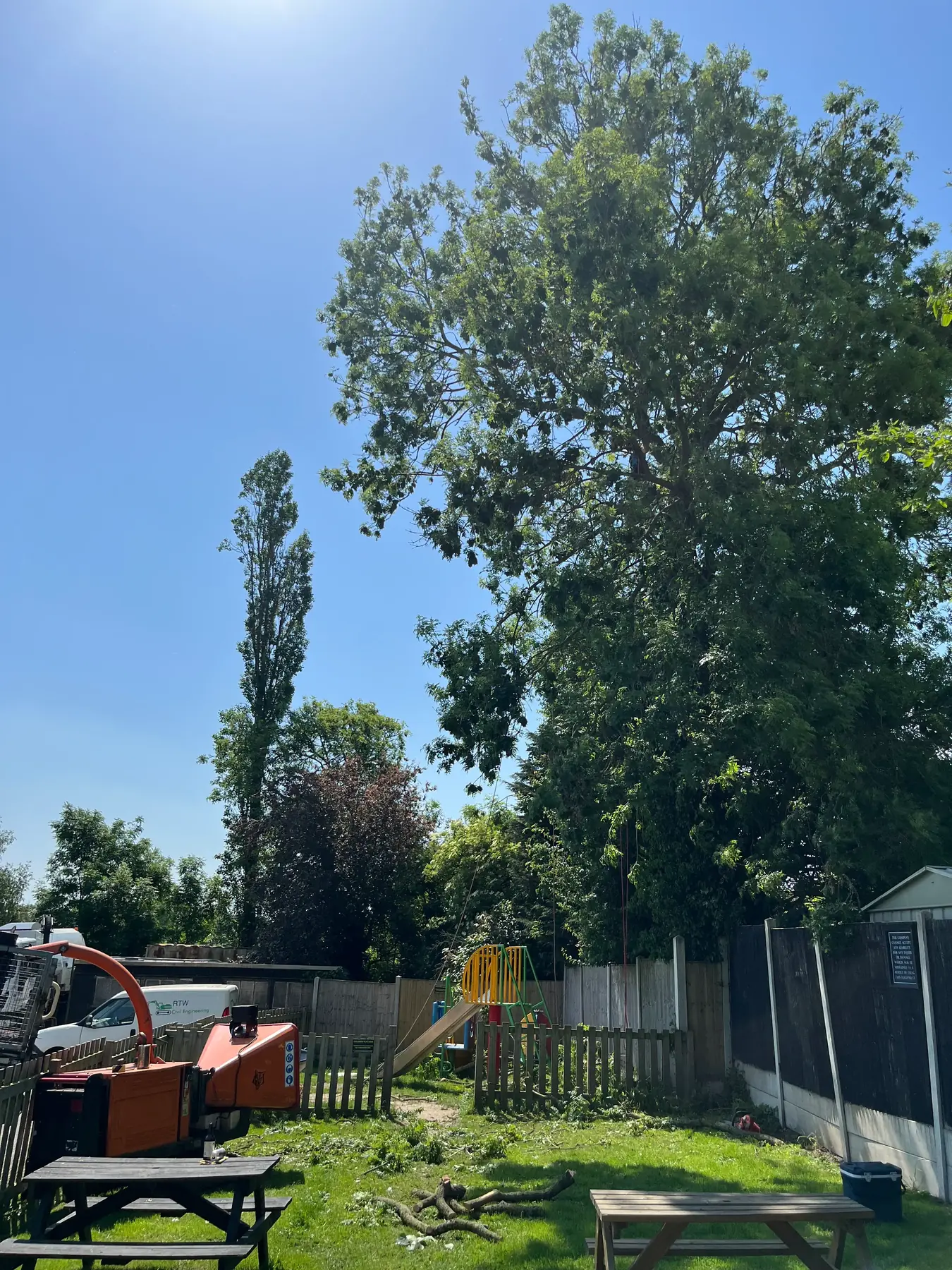
Most tree work in a private garden needs no permission at all. But two things create a legal requirement before you cut, and both are common across Leeds and the wider Yorkshire area: a Tree Preservation Order (TPO), or being inside a conservation area.
| Situation | What’s required |
|---|---|
| Tree Preservation Order (TPO) | Written council consent before any work. Applying is free; council has 8 weeks to decide |
| Conservation area | 6 weeks’ written notice to the council before most tree work |
| Neither | No permission needed for most private garden trees |
Tree Preservation Orders
A TPO is a legal protection on a specific tree, group or woodland. It makes it an offence to cut down, top, lop, uproot or damage the tree without the council’s written consent. TPOs are common on mature, prominent trees: limes, oaks, beeches and horse chestnuts on older streets and large gardens.
To do any work on a TPO tree, you apply to the council. There’s no fee, the council has eight weeks to decide, and most reasonable applications - a sensible crown reduction, removing a genuinely dangerous tree - are granted.
Conservation areas
Large parts of inner Leeds, and the historic cores of Wetherby, Otley, Ilkley, York and Selby, sit within designated conservation areas. Inside one, you must give the council six weeks’ written notice before most tree work. If they don’t object within six weeks, you can go ahead.
One distinction worth knowing: Ilkley and Burley-in-Wharfedale fall under Bradford Council, not Leeds. York and Selby are handled by City of York and North Yorkshire Council respectively.
Check your postcode in seconds
Our free checker queries the national planning register for conservation areas and protected-tree zones near your address. Run a free TPO check.
How to check your address
- Use our postcode checker - a quick first indication of conservation areas and TPO zones. Run a free TPO check in seconds.
- Ask the council directly. They hold the definitive register; some councils haven’t fully published to the national data yet.
- Ask us. We check the planning status of every tree before we quote, and handle any application from submission to decision.
Unauthorised work to a protected tree is a criminal offence, and “I didn’t know” isn’t a defence. The process is more straightforward than most people expect, and getting consent first is always cheaper than getting it wrong.