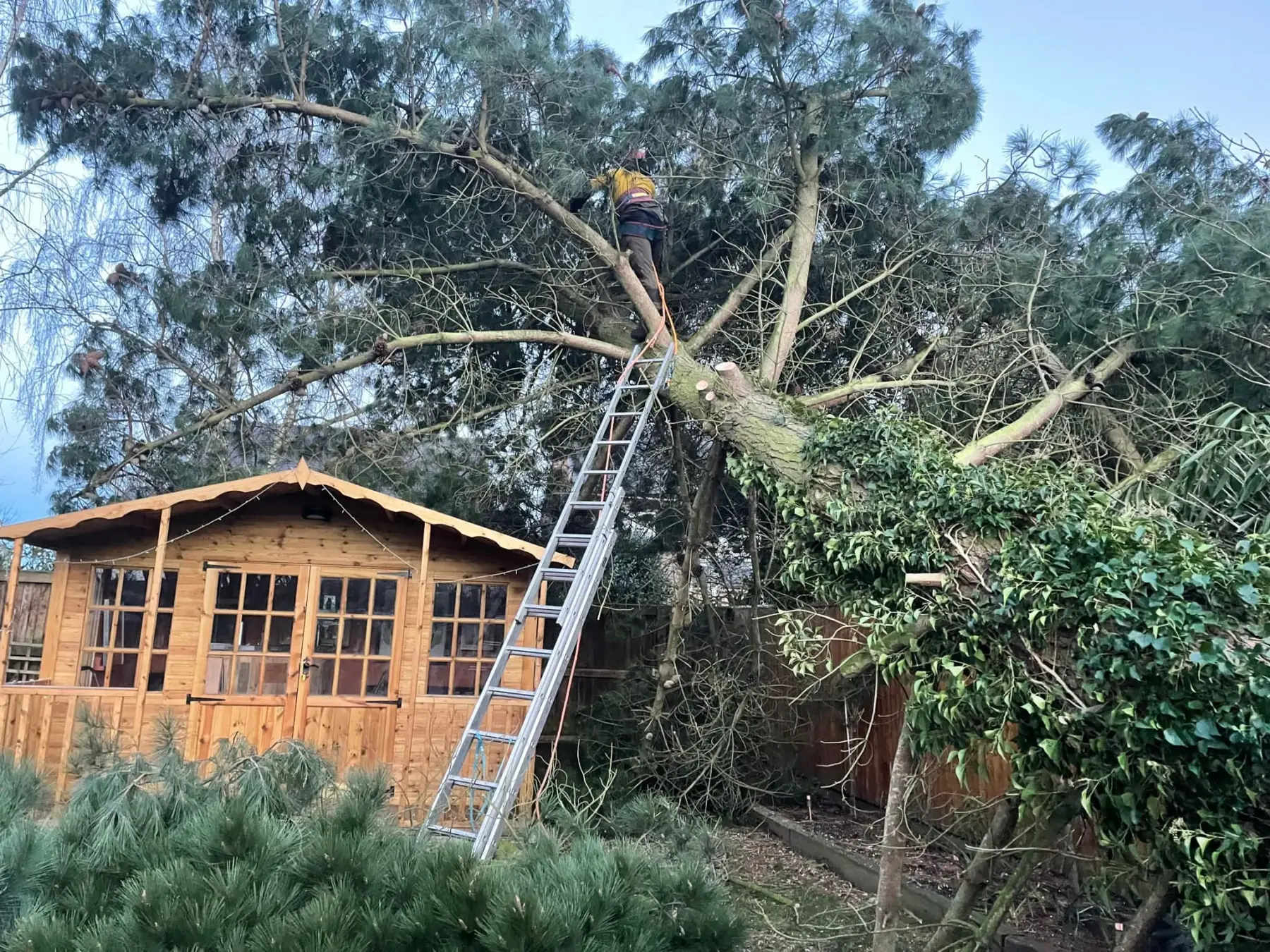
If a tree has come down, deal with people before you deal with the tree. Get everyone, especially children and pets, well back from it; treat any wire near it as live and report it; and only then think about clearing up. Across Leeds and York we get called out to storm-damaged and fallen trees every winter, and the jobs that go wrong almost always go wrong in the first ten minutes, before anyone qualified has looked at it.
A fallen tree looks static and finished. Very often it is not. A trunk resting on a fence, a limb hung up in another tree, a root plate half out of the ground: these are loaded, and they move. So here is the calm, correct order to work through, the free numbers that actually matter, and where a trained arborist comes in.
First: make people safe
Before anything else, before photos, before phone calls, get people clear. Look at the whole scene, not just the trunk on the ground.
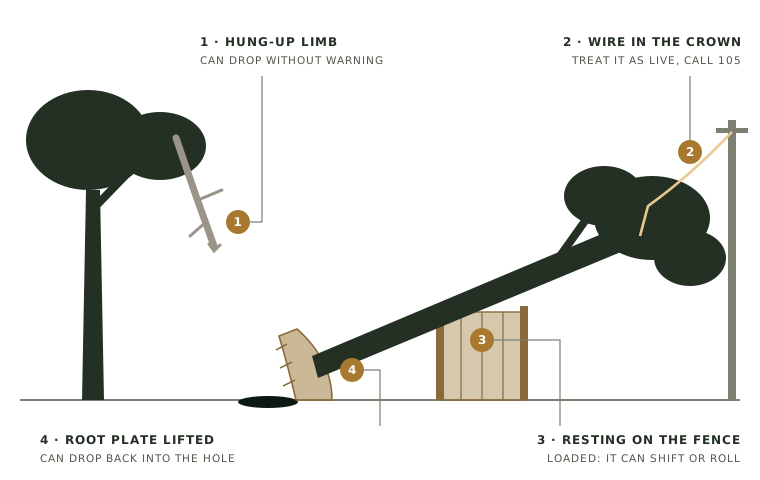
Then work through this in order.
- Move everyone well back. Keep children, pets and onlookers a good distance from the tree and anything it is resting on. Assume it can shift.
- Look up as well as down. A tree that is part-fallen may have limbs hung up above head height that can drop without warning. Do not stand under them.
- Assume every wire is live. If the tree is touching, or has brought down, any cable or line, treat it as live electricity. Never approach it, never touch it, never touch the tree that is touching it.
- Report downed or hanging power lines straight away (the number is in the next section). Keep everyone back until the network operator confirms it is safe.
- Do not start clearing in the dark or in high wind. If the weather is still bad, secure the area and wait. Nothing in the garden is worth a night-time chainsaw injury.
That order matters. People first, power lines second, property a distant third.
The numbers that actually matter
Save these before you need them. Calling the right one first saves a lot of wasted time.
| Situation | Who to call |
|---|---|
| Power cut, or a fallen or hanging power line | Free national number 105 |
| A tree is an immediate danger to life, or blocking a fast/busy road | 999 |
| Road blocked but nobody in immediate danger | Local council highways team |
| Tree on your house or garden, no injury, no live wire | An emergency tree surgeon |
For a power cut or a downed line, call 105, the free Power Cut 105 service. It routes your call straight to your local electricity network operator, which across most of Yorkshire is Northern Powergrid. They own the wires; they are the ones who make a downed line safe. It is free from mobiles and landlines.
If a fallen tree is blocking a public road or is an immediate danger to life, call 999. For a blocked road that is not life-threatening, report it to your local council highways team: Leeds City Council, City of York Council, or North Yorkshire Council for the Selby area.
Why not just cut it up yourself
This is the part people underestimate. A tree that has fallen or part-fallen is rarely lying at rest. It is usually holding load somewhere, and a chainsaw releases that load all at once.
The specific dangers with storm-damaged trees:
- Spring tension. Bent-over limbs and trapped branches store energy like a drawn bow. Cut one at the wrong point and it snaps back violently, fast enough to break bones.
- Hung-up trees. A tree caught in the branches of another has not finished falling. It can come down the moment you disturb it, in a direction you did not expect.
- Compression and the trunk rolling. A trunk supported at both ends is in compression on top and tension underneath. Cut it wrong and it pinches the saw, drops, or rolls onto you.
- Root plates. A half-uprooted tree can slam its root plate back into the hole when weight is removed from the crown.
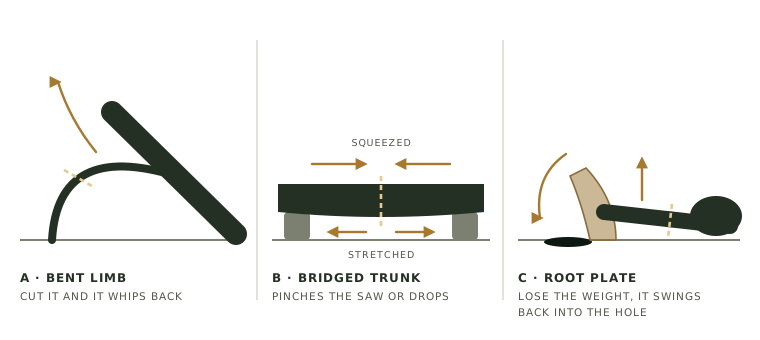
None of that needs a statistic to make the point. Chainsaw work on a tree that is under load is a trained-and-insured-arborist job, full stop. We do it with the right cuts, in the right order, often with the limb roped and the tension released deliberately rather than by surprise.
Send us a photo and we will tell you straight
Not sure how urgent it is? WhatsApp us a photo of the tree and we will give you an honest view on whether it needs an emergency call-out or can wait for a booked visit. No pressure either way.
Insurance and who pays
Before anyone moves a single branch, get your phone out. Photograph everything: the tree, the damage, the wider scene. Insurers want to see the state of things before clearance, and photos protect you.
The general picture, kept general because policies vary:
- Tree has damaged your property. Where a tree has hit your house, garage, wall, fence or car, buildings or home insurance often covers both removal and repair. Report it to your insurer, follow their process, and keep the photos.
- Tree just fell in the garden, no damage. A tree that has simply blown over without hitting anything is frequently not covered for removal. That clearance is often down to you.
- A neighbour’s tree fell onto your property. Responsibility usually turns on whether the owner was negligent. There is a lot of nuance here, so we have written it up separately in our guide to neighbours and trees law.
The honest summary: policies vary, so check yours. Read the wording, or call your insurer and ask the direct question before you commit to any work. If we do the clearance, we can provide a written, itemised record that supports a claim.
What Birdsall does on a storm call-out
When we get to a fallen-tree job, the work runs in a clear order.
- Make safe first. We stabilise or remove whatever is dangerous, releasing tension deliberately and roping limbs down rather than dropping them, so nothing else can move or fall.
- Then a clean clear-up. Once it is safe, we take the tree down to a tidy finish, chip the brash, and leave the site clear rather than a heap of logs.
- Qualified and insured. We are NPTC Level 2 (CS30/CS31/CS38), work to ARB Approved standards, and carry £5m public liability insurance. Established 2012.
- Across the patch. Emergency and fallen-tree call-outs across Leeds and out to York and Selby.
If it is properly urgent, phone is best: 07563 634995. If it can wait a little, WhatsApp a photo and we will tell you honestly how soon it needs doing. Our emergency tree service page has more on how call-outs work, and for a planned removal see tree felling.
Better still: catch it before the storm
The cheapest storm-damaged tree is the one that never comes down. A lot of what falls in a gale was already weak, and the warning signs are usually there months ahead: fungal brackets at the base, cracks, deadwood, a lean that has recently changed, lifting soil on one side.
Spotting those early is far cheaper than a night-time call-out and a damaged roof. Our guide to the signs of a dangerous tree walks through what to look for, and a proper tree survey puts a qualified eye on anything you are unsure about before the weather does it for you.
Get an honest view
If a tree is down and you are not sure how safe it is, keep everyone back, report any wires to 105, and get someone qualified to look before you touch it. Tell us about your tree or send a photo over WhatsApp, and we will give you a straight answer on how urgent it is and what it will take to put right, across Leeds and out to York and Selby.