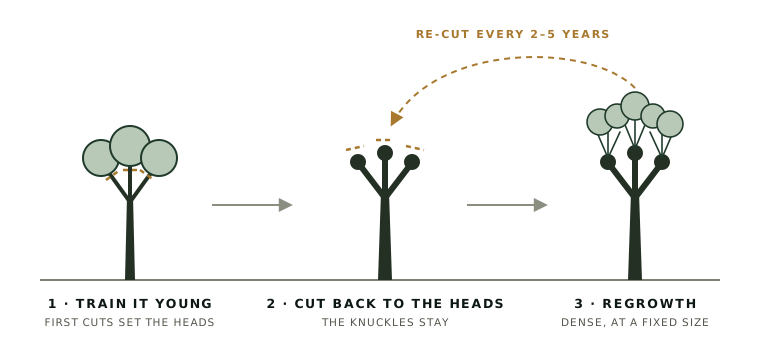
Pollarding is a pruning system where a tree’s branches are cut back to the same fixed points, the pollard heads, on a repeating cycle, usually every two to five years. The result is a tree that stays at a chosen height and spread indefinitely, however big its species would naturally grow. You’ll have seen it on street limes and riverside willows: the knuckled fists in winter, the dense ball of fresh growth by midsummer.
It’s an old technique, the way working trees were harvested for fodder and poles for centuries out of the reach of grazing animals, and it remains the best answer to a common modern problem: a fast-growing tree in a space that can’t take its full size.
Pollarding vs topping: the difference that matters
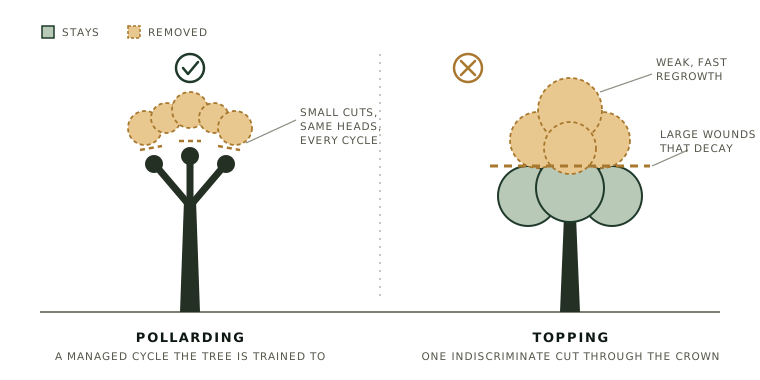
These get confused because, from the pavement, both look like “cutting the tree right back”. They are not the same job.
Topping is a one-off, indiscriminate cut through a mature crown, with no regard for where the tree can respond from. It leaves large wounds that the tree can’t close, which decay; and it triggers a panic-flush of fast, weakly attached regrowth. A topped tree is more dangerous five years later, not less. No reputable arborist tops trees, and it’s the main reason “we’ll take it down by half, mate” door-knockers are worth showing the gate.
Pollarding makes its cuts at established heads that the tree has been trained to from a young age. The tree compartmentalises these small, repeated wounds, the regrowth is managed on a cycle, and the system can carry on for the life of the tree. Pollarded willows and limes routinely outlive their free-grown neighbours.
The honest catch: true pollarding has to start young. If you have a mature, never-pollarded tree that’s outgrown its spot, the professional options are a crown reduction, which reshapes the crown at its natural growth points, or, where the tree is simply the wrong tree for the space, removal and replacement. Anyone offering to “pollard” a 60-year-old beech is offering to top it.
Which trees can be pollarded?
Pollarding only works on species that regrow freely from old wood. The classics:
| Species | How it takes to pollarding | Typical re-cut cycle |
|---|---|---|
| Willow | Outstanding, the traditional pollard | 1-3 years |
| Lime | Excellent, the classic street pollard | 3-5 years |
| London plane | Excellent, most of urban Britain’s pollards | 3-5 years |
| Poplar | Very good | 2-4 years |
| Eucalyptus | Very good, often the rescue for one that’s bolted | 2-3 years |
| Mulberry, ash, oak | Workable; slower cycles, start them young | 4-6 years |
And the ones to leave alone: beech, birch, cherry and most conifers don’t reliably shoot from old wood. Cut those back to a skeleton and you get dieback, not regrowth. If one of these has outgrown its space, that’s a reduction or removal conversation, and we’ll tell you which honestly on a site visit.
Too big, but not one to pollard
If your tree is a beech, birch or conifer that has outgrown its spot, a crown reduction reshapes it at its natural growth points without the dieback that hard-cutting these species causes.
When should pollarding be done?
In the dormant season, November to early March, for almost all species. The tree’s energy reserves are in the roots and trunk, the structure is visible without leaf, and the spring flush then does the recovering. Two Yorkshire-specific notes from our own jobs:
- Check for bats before winter work on older pollards. Established pollard heads form exactly the cavities bats roost in, and bats are legally protected. It’s one of the things we look for before a saw starts.
- Don’t pollard in hard frost or in spring sap-rise: willows and maples especially will bleed heavily from spring cuts.
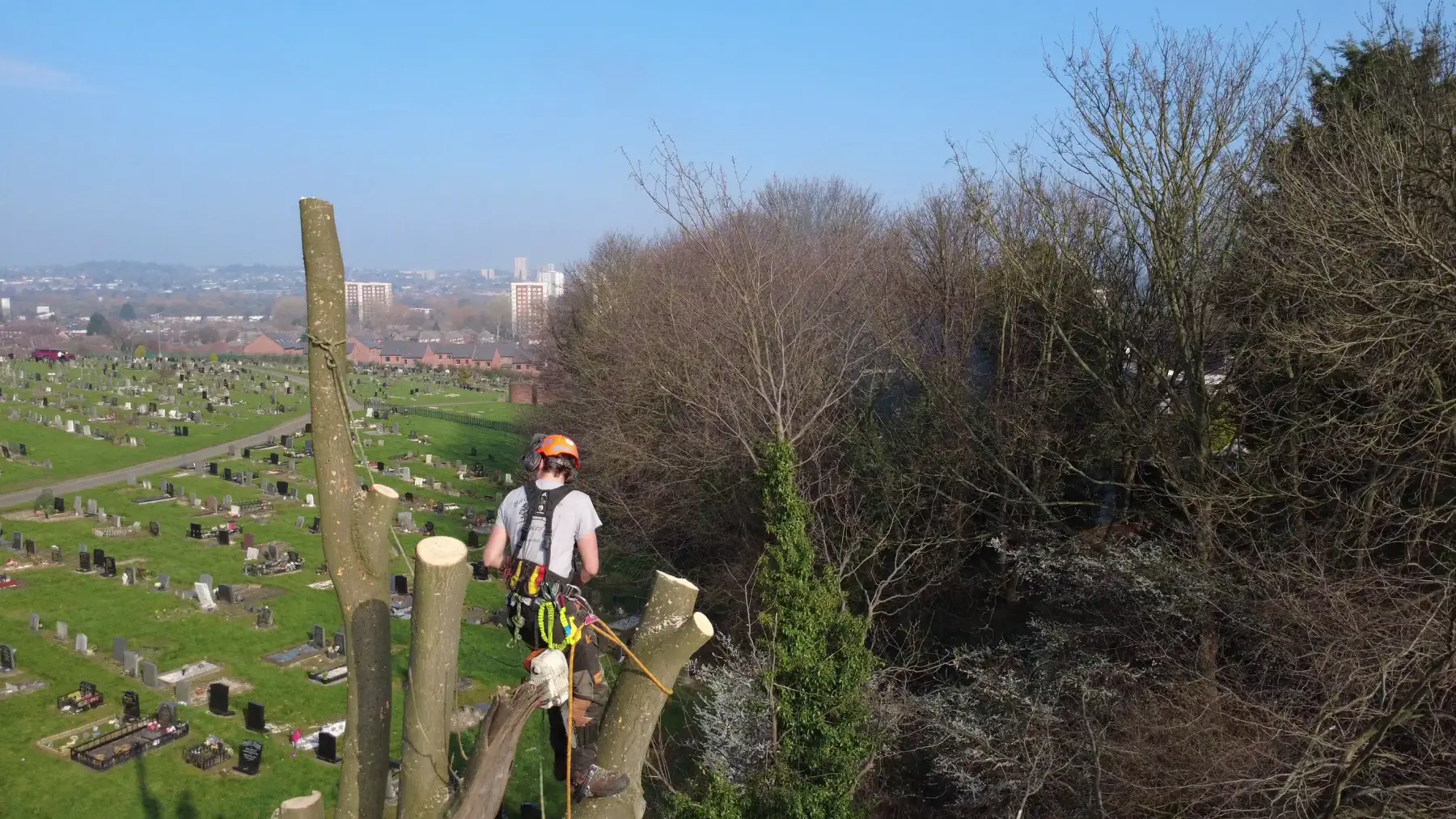
A first-time pollard (training a young tree) and a routine re-cut both happen in the same window. If a pollard has been left so long the poles are heavy (a lapsed pollard), winter becomes more important still, and the job needs climbing and rigging rather than a quick re-cut.
What does pollarding cost?
| Job | Typical range |
|---|---|
| Routine re-pollard, small garden tree | Low hundreds |
| Larger tree or lapsed pollard | Climbing and rigging - several times the above |
Three things drive the price: size of the regrowth, access for the kit, and disposal of the arisings (we chip and clear everything as standard). Our tree surgery pricing guide breaks it down properly.
The cheapest pollard is the one you keep on cycle. Skipping a willow’s re-cut for six years doesn’t save three visits - it turns a maintenance job into a dismantle.
Do you need permission?
If the tree has a Tree Preservation Order or stands in a conservation area, you need the council’s consent (TPO) or six weeks’ written notice (conservation area) before anyone cuts. Check before you book: our free TPO checker covers both, our guide to Tree Preservation Orders explains the process, and we handle any application as part of the job.