The honest answer is that most tree work can be done safely at any time of year, and a genuine emergency never waits for the season. But timing it well gives a cleaner result and is kinder to the tree.
Quick reference
| Season | Best for |
|---|---|
| Nov - Mar (dormant) | Crown reduction, thinning, deadwooding, most structural pruning |
| Mid-summer | Cherry, plum, birch, maple - reduces disease risk and sap bleed |
| Late summer (Aug-Sep) | Hedges - after nesting season, once growth has slowed |
| Any time | Emergency work - dead, dangerous or storm-damaged trees never wait |
Autumn and winter: the default for pruning
Once the leaves are off, we can read a tree’s structure properly - every branch, every defect, every natural growth point. The tree is also dormant, so it isn’t pouring energy into growth while it heals. For most crown reductions, thinning and deadwooding, autumn through to late winter is the sweet spot.
The summer exceptions
A few species are better pruned in mid-summer:
- Cherry, plum and other Prunus: pruning in summer dramatically reduces the risk of silver leaf disease and bacterial canker.
- Birch and maple: these bleed sap heavily if cut in late winter or spring, so summer is cleaner.
For a dedicated month-by-month guide to fruit trees, see when to prune fruit trees.
Hedges and nesting birds
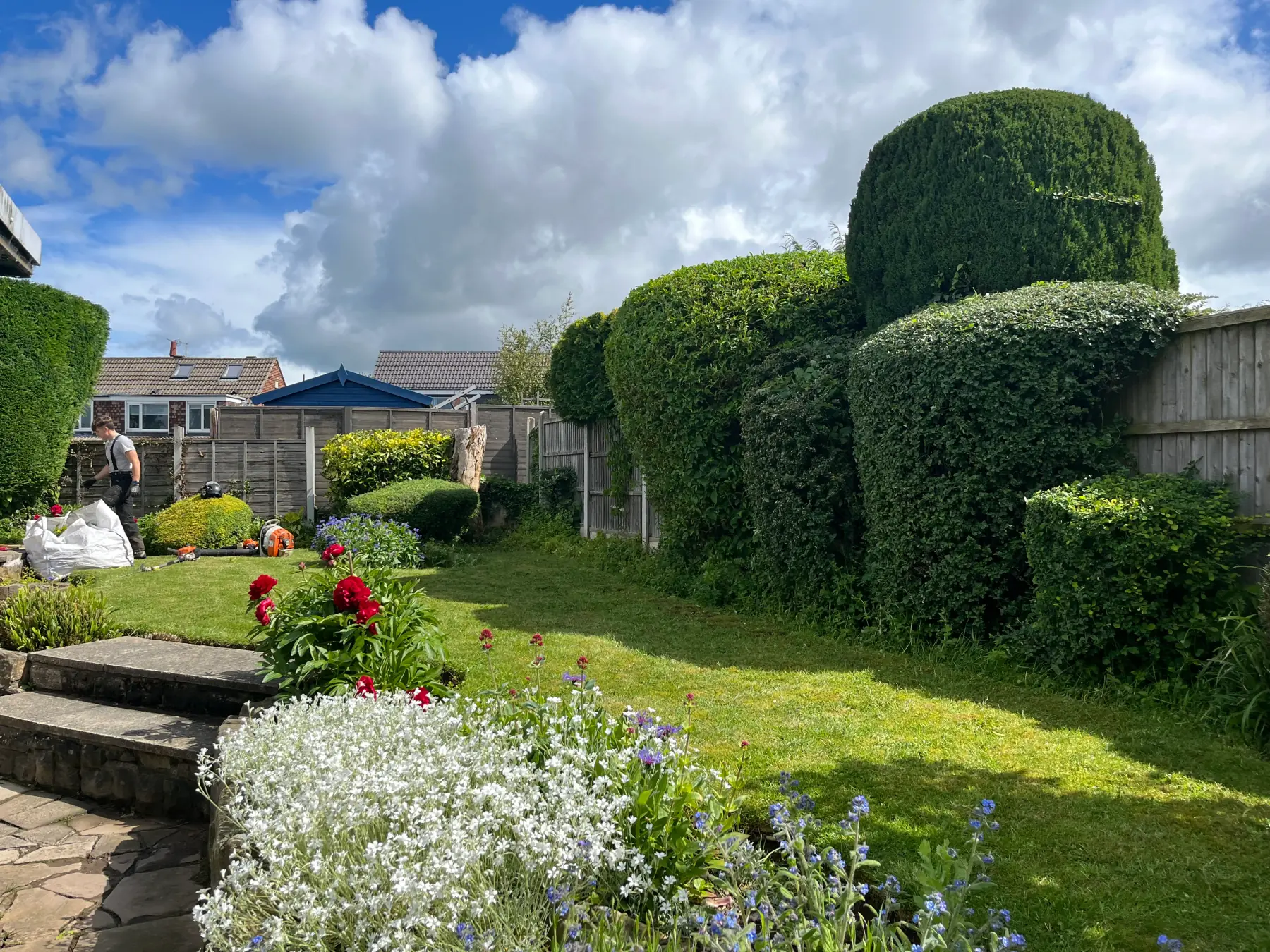
It’s an offence to damage or destroy an active bird’s nest, and the main nesting season runs roughly March to August. We check every hedge before we start, and if there are birds in it, the work waits. For routine maintenance we aim for a late-summer cut, once growth is finished and the birds have fledged.
For the legal side of hedge cutting see our guide to hedge cutting and the law.
Book the right window for your tree
Tell us what you have in mind and we will advise the best season for it, then book it in. Get a free site visit and written quote, with no obligation to proceed.
When timing doesn’t matter
Safety always comes first. A dead, dying or dangerous tree gets dealt with straight away, whatever the season. If you’re unsure whether your job can wait for the ideal window, that’s exactly the sort of thing we’ll talk through on a free site visit.