Ash dieback (Hymenoscyphus fraxineus) is a fungal disease now widespread across Leeds and the wider Yorkshire area, expected to kill a large proportion of the UK’s ash trees. If you have an ash on your property, here is what to look for.
How to identify it
The signs are clearest in summer when the tree is in leaf.
| Sign | Where to look |
|---|---|
| Wilting, blackened leaves that hang on | Throughout the canopy |
| Dead branches and bare patches | Crown - often top and outer edges first |
| Diamond-shaped lesions on bark | Where branches meet the trunk |
| New growth low on the trunk | Base of tree (a stress response) |
A single bad year doesn’t always mean dieback, but steady decline across several seasons usually does.
Why it matters
The danger is structural. As the tree declines, the timber becomes brittle and unpredictable - affected trees can drop limbs or fail entirely with little warning. That’s a serious risk near a road, footpath, building or boundary. Our guide to the signs of a dangerous tree covers what else to look for.
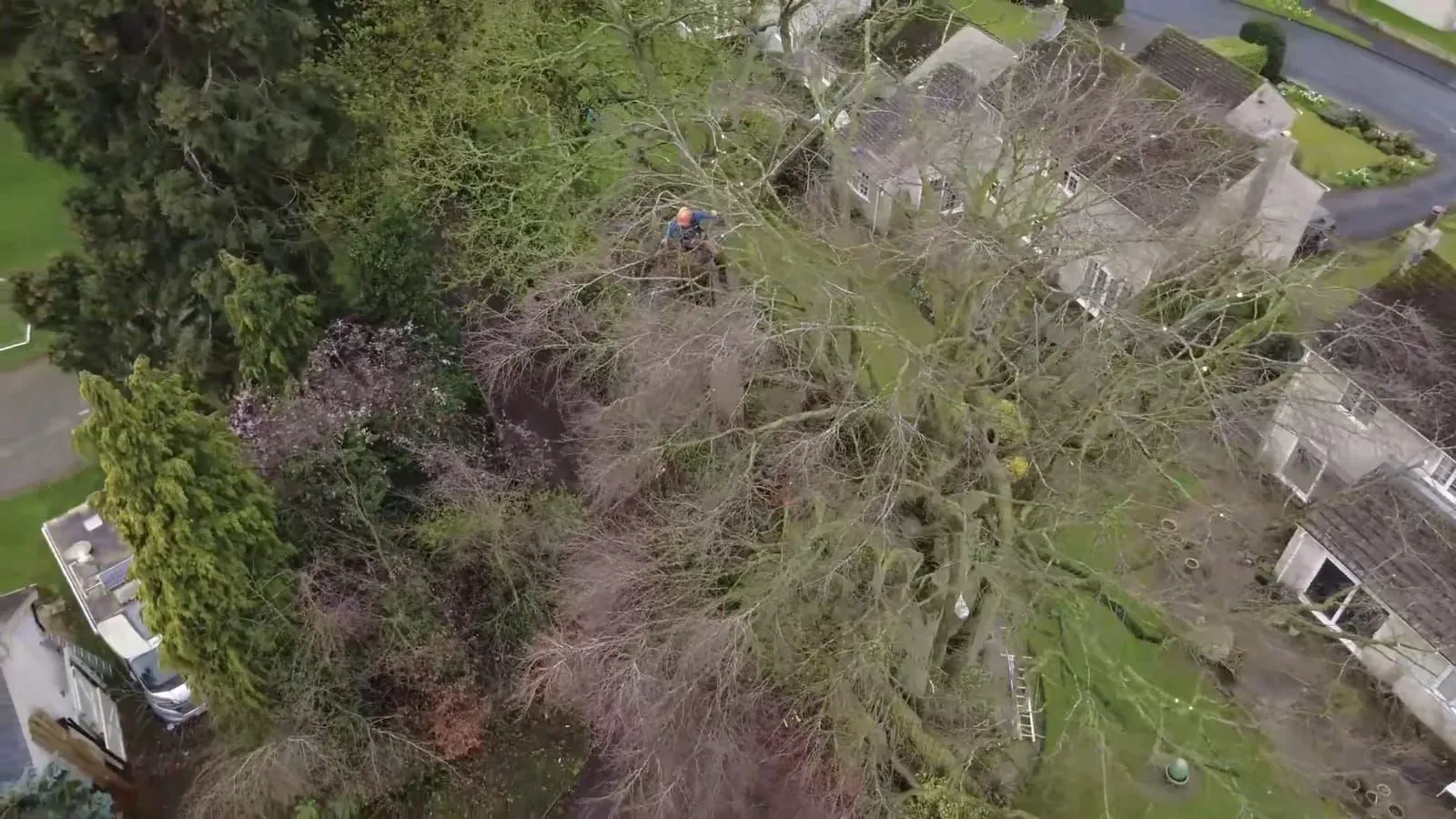
A diseased ash often can’t be safely climbed, so removal must be done by other means - firmly a job for an experienced, insured arborist.
Get an honest read before it becomes urgent
A quick survey tells you whether the tree can be monitored or needs to come down, and how soon. Book a tree survey and we'll give you a straight answer on a free site visit.
What to do
- Don’t panic, but don’t ignore it. Early-stage trees in low-risk spots can sometimes be monitored.
- Get it assessed. Position matters as much as disease stage: a tree over a lane is a very different risk from one in the middle of a field.
- Act before it becomes an emergency. A planned, controlled takedown is safer and cheaper than dealing with a tree that’s already failing.
We assess ash across Leeds and out toward York, and we’ll give you an honest view - including when a tree can sensibly be left alone. Book a free site visit.