In the UK, “arborist” and “tree surgeon” mean the same job. They’re two names for the same trade, and you’ll hear working professionals use both, sometimes in the same sentence. Neither word is protected in law, which means anyone can print either one on a van. So the title tells you almost nothing about whether the person is any good.
What actually separates a safe, skilled tree firm from a risky one isn’t the word they use. It’s three things you can check in ten minutes: their certificates, their insurance, and the way they write a quote. This guide explains what the two words really mean, then gives you the checklist we’d want a member of our own family to use before letting anyone near their trees, in Leeds, York or anywhere else.
Arborist vs tree surgeon: the short answer
If you just want the headline: for a normal domestic job, they’re the same thing, and you should choose on qualifications, not job title.
Where a shade of difference exists, it’s about emphasis rather than a hard line:
| Tree surgeon | Arborist | |
|---|---|---|
| Everyday meaning | The hands-on climbing and cutting side | The wider science of tree care |
| Typical work | Pruning, felling, dismantling, stump grinding | All of the above, plus surveys, health diagnosis, long-term planning |
| Where the word comes from | Traditional British trade term | The more technical, international term (from arbor, Latin for tree) |
| Legally protected title? | No | No |
Read that table and the honest conclusion is that the overlap is almost total. A “consulting arborist” who only writes reports and never climbs is a genuine specialism, and a firm that only does chainsaw work and calls itself a tree surgeon is real too. But the vast majority of local businesses, ours included, do both: we survey, diagnose and advise, and we do the climbing and cutting. So don’t agonise over the label on the advert.
What is a tree surgeon, and what do they do?
A tree surgeon is the person who does the physical work on a tree. On any given week that means:
- Pruning and crown reduction, reshaping a tree at its natural growth points to bring down its height or spread while keeping it healthy.
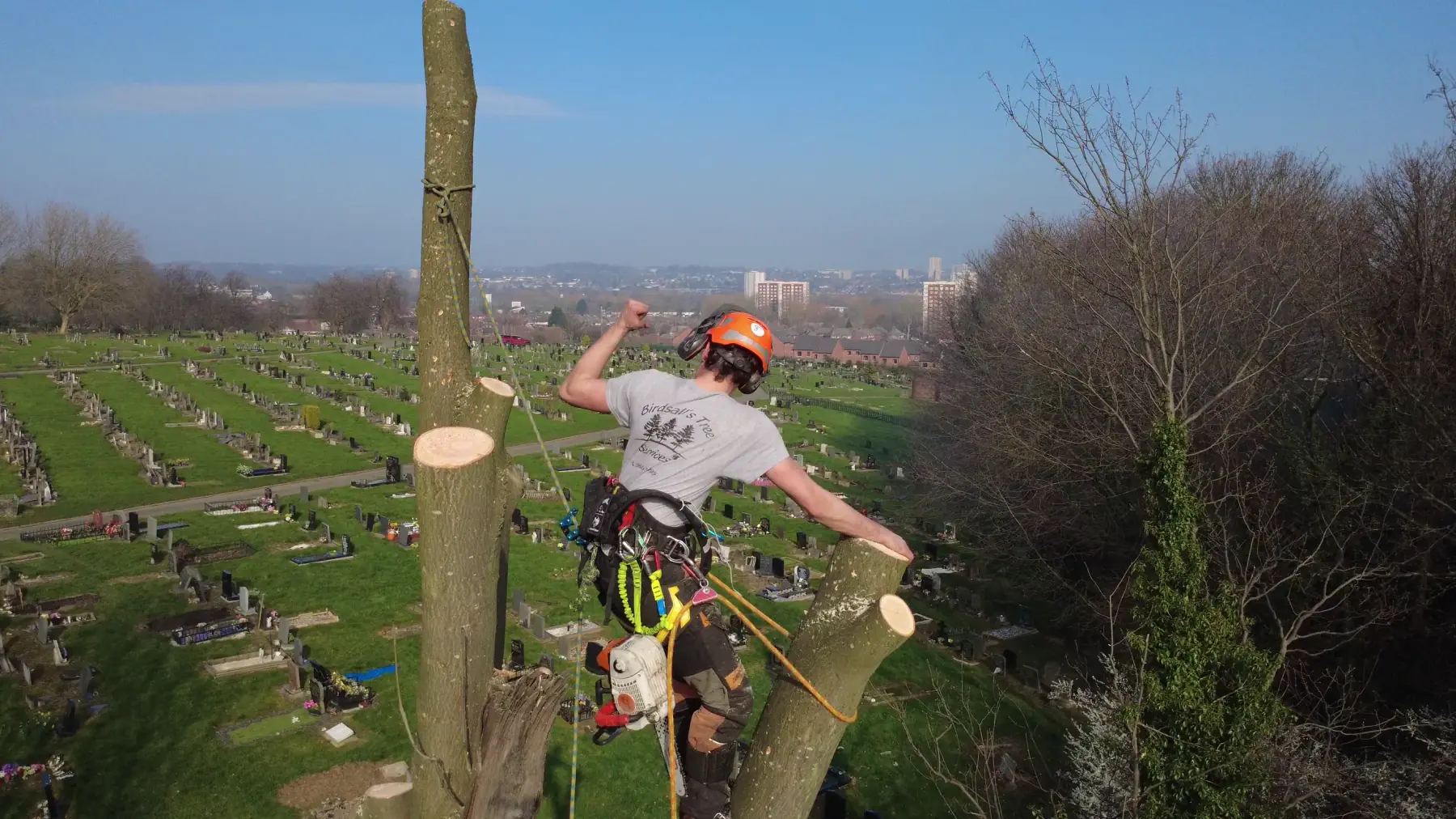
- Felling and sectional dismantling, either dropping a tree in one piece where there’s room, or, far more often in gardens, climbing it and lowering it down in controlled sections over a roof, fence or greenhouse.
- Stump grinding, removing what’s left after felling.
- Hedge cutting, from a formal reshape to a heavy renovation.
- Emergency and storm work, making a wind-damaged or fallen tree safe.
- Clearing the waste, chipping the brash and taking the timber away.
A lot of that is skilled, dangerous work. Sectional dismantling means running a chainsaw one-handed, on a rope, forty feet up, while managing where each piece falls. It is one of the reasons the trade takes qualifications seriously, and one of the reasons the cheapest quote is so often the one to worry about.
What is an arborist, and how is it different?
An arborist is trained in the care of individual trees as living things, not just as timber to be cut. That includes everything a tree surgeon does, and then the parts that happen with a notebook rather than a chainsaw:
- Tree health and disease diagnosis, spotting ash dieback, honey fungus, or the early signs a tree is failing.
- Tree surveys and reports, including the BS 5837 surveys needed for planning applications and the mortgage or subsidence reports insurers ask for.
- Risk assessment, judging whether a tree is genuinely dangerous or just looks it, and what the least-invasive fix is.
- Long-term management, planning how a tree should be cared for over years, not just this one visit.
That’s why some people reach for “arborist” when they mean the thinking, diagnostic side and “tree surgeon” when they mean the hands-on side. It’s a soft distinction, not a rule. When we survey a tree before we quote, we’re being an arborist. When we climb it the following week, we’re being a tree surgeon. Same person, same firm, same day rate.
What qualifications should a tree surgeon or arborist have?
This is the part that actually matters, and the part a job title can’t tell you. Tree work in the UK isn’t licensed the way gas work is, so there’s no single badge to look for. Instead there’s a stack of certificates of competence, historically issued under the NPTC name and now under City & Guilds. The ones that count for practical tree work:
- CS30 and CS31, chainsaw maintenance, cross-cutting and the felling of small trees. The foundation tickets.
- CS38, tree climbing and aerial rescue. This is the one that says a person is trained to work at height and to get an injured colleague down safely.
- CS39, using a chainsaw aloft. Cutting from a rope is a different skill again.
For reference, our own team holds NPTC Level 2 (CS30, CS31 and CS38) and works to ARB Approved standards. Beyond the individual tickets, the marks of a serious outfit are:
- Membership of the Arboricultural Association, the industry body. Its “Approved Contractor” scheme is independently audited and the closest thing the trade has to a gold standard.
- Work done to BS 3998, the British Standard for tree work. It governs how cuts are made so the tree heals properly, rather than being butchered.
- A registered waste carrier licence, which makes it legal for them to take your arisings away. No licence, and that “we’ll clear it for you” can end up fly-tipped, with the trail leading back to you.
Any decent firm will show you their certificates without a fuss
A qualified, insured tree surgeon has nothing to hide, so asking to see certificates and an insurance certificate is completely normal. If you'd like to see ours, we bring them to the free site visit, and you can read more about the team on our about page.
How to choose a good one: the seven-point checklist
Forget the word on the van. Run any quote through these seven checks and you’ll filter out almost every cowboy:
- Certificates of competence. Ask which NPTC or City & Guilds units the climbing team holds. Vague answers are an answer in themselves.
- At least £5m public liability insurance. Ask to see the certificate. Big trees near buildings are exactly where you don’t want an uninsured accident.
- A written, itemised quote. Not a number scribbled on a pad, and not a cash “day rate”. A proper quote says what’s coming off, what’s being left, and whether waste removal is included.
- A registered waste carrier licence. You can check any firm free on the Environment Agency’s public register.
- Arboricultural Association membership or another recognised body. Not essential for a small job, but a strong positive signal.
- Recent local reviews or jobs. Real, verifiable work in your area beats a glossy leaflet. Ask to see photos of jobs like yours.
- They check for legal restrictions. A good firm asks whether your tree might have a Tree Preservation Order or sit in a conservation area before quoting, because cutting a protected tree without consent is an offence that lands on you. If they don’t mention it, they may not know, or care.
That last one is worth a beat. It takes seconds to rule out: our free TPO checker covers both TPOs and conservation areas by postcode, and if your tree is protected we handle the council application as part of the job.
Which one do you actually need?
Since it’s the same trade, the more useful question is “what does my job need?” Here’s how the common ones map:
| What you’ve got | Who to call |
|---|---|
| An overgrown, too-big or dangerous tree | A tree surgeon / climbing arborist |
| A tree you think is diseased or dying | An arborist for diagnosis first, before any cutting |
| A stump left behind | A tree surgeon with a stump grinder |
| A planning application that needs a tree report | A consulting arborist for a BS 5837 survey |
| A mortgage or insurer asking about a tree near the house | An arborist for a survey / report |
| Storm damage or a fallen tree | An emergency tree surgeon, fast |
For most of these, one local firm covers the lot. We do the surveys and the climbing, so a single call handles diagnosis, quote and work. If you’re weighing up a specific job, our services pages break each one down, from crown reduction and pruning to felling and tree surveys.
Red flags that should make you walk away
Some warning signs are worth knowing because they turn up again and again on the jobs we get called in to fix:
- They knocked on your door. The overwhelming majority of good tree firms are booked from recommendations and reviews, not cold-calling. Doorstep “we’re working nearby and noticed your tree” is the classic opener.
- Cash only, and money up front. A deposit for materials on a big job is fine. A demand for the full amount in cash before a branch is cut is not.
- No written quote, no paperwork, no certificates. If you can’t see it, assume it doesn’t exist.
- Pressure to decide today. A real tree isn’t going anywhere. Anyone rushing you is managing your judgement, not your tree.
- A price far below everyone else. Which brings us to the last point.
What good tree work costs, and why the cheapest quote is a warning sign
Tree work has real, unavoidable costs behind it: trained people, expensive insurance premiums, climbing kit, chainsaws, a chipper, and the cost of disposing of the waste legally. When one quote comes in well under all the others, one of those corners is almost always being cut, and it’s usually the insurance or the waste.
That’s why the honest advice is to be as wary of the lowest number as the highest. A fair quote from a qualified, insured firm reflects what the job actually takes. Our tree surgery pricing guide sets out the real ranges and, more importantly, the three things that drive them: the size of what’s coming off, the access for the team and kit, and clearing the arisings. We quote fixed and in writing from a free site visit, so there are no day-rate surprises.
Qualified, insured tree work in Leeds and York
Whether you call us arborists or tree surgeons, the thing worth knowing is that we’re the same qualified, insured team either way, £5m public liability and £10m employer’s liability, surveying and diagnosing, then doing the climbing and cutting, across Leeds, York, Selby and the villages between. If you’ve got a tree you’re not sure about, that’s exactly what a free site visit is for: we’ll tell you straight whether it needs work, whether it’s protected, and what it’ll cost, in writing. Request a quote and you’ll get a plain answer from the person who’ll do the job.